

The Curator Archetype
Builder of Worlds, Not Things

Taste is one of the most powerful forces shaping our lives. It influences the people we are drawn to, the lifestyles we pursue, the communities we join, the brands we trust, the products we buy, the experiences we seek, and even the futures we aspire to.
Yet taste remains chronically overlooked. We don’t teach it in schools. We don’t measure it. We rarely discuss it with any degree of seriousness. Instead, we treat our preferences as arbitrary and subjective.
But what if taste is something deeper? What if it is a map of identity?
My team and I have spent much of this year developing new tools to explore that very question. This fall, we’ll launch the Aesthetic Archetypes Assessment, an innovative “taste test” designed to map how individuals respond to aesthetic cues across a broad range of style domains. The assessment will uncover the patterns that determine how we perceive the world, what we value, and ultimately how we choose to live. (More on that soon.)
Until then, this newsletter will continue to explore Aesthetic Archetypes as part of this ongoing series. Together, we'll examine the forces that shape them- from biology and temperament to upbringing, environment, and cultural exposure - and consider how they apply to business, branding, and beyond.
One archetype I’ve returned to repeatedly is the Curator.
The Curator’s gift is the ability to impose structure on complexity. Curators continually compose and refine their environments, wardrobes, work, and activities until every element meets their exacting standards and feels in harmony with the whole.
Their motive is to order the world around them. But unlike another control-driven archetype, the Precisionist, the Curator does not shy away from detail or complexity. And unlike the Classicist, who also seeks order, the Curator remains open to experimentation.
I was reminded of the Curator archetype during a recent SiriusXM conversation with Andrea Scherz, the third-generation owner and operator of Gstaad Palace in Switzerland. Andrea is the quintessential Curator.

Inside the Curator’s World
Throughout the past century, Andrea and his family have transformed Gstaad Palace into something far more remarkable than a five-star hotel. They’ve created a world unto itself, one defined by elegance, heritage, and deep connections. It offers a glimpse into a way of living that’s long forgotten, but more valuable than ever.
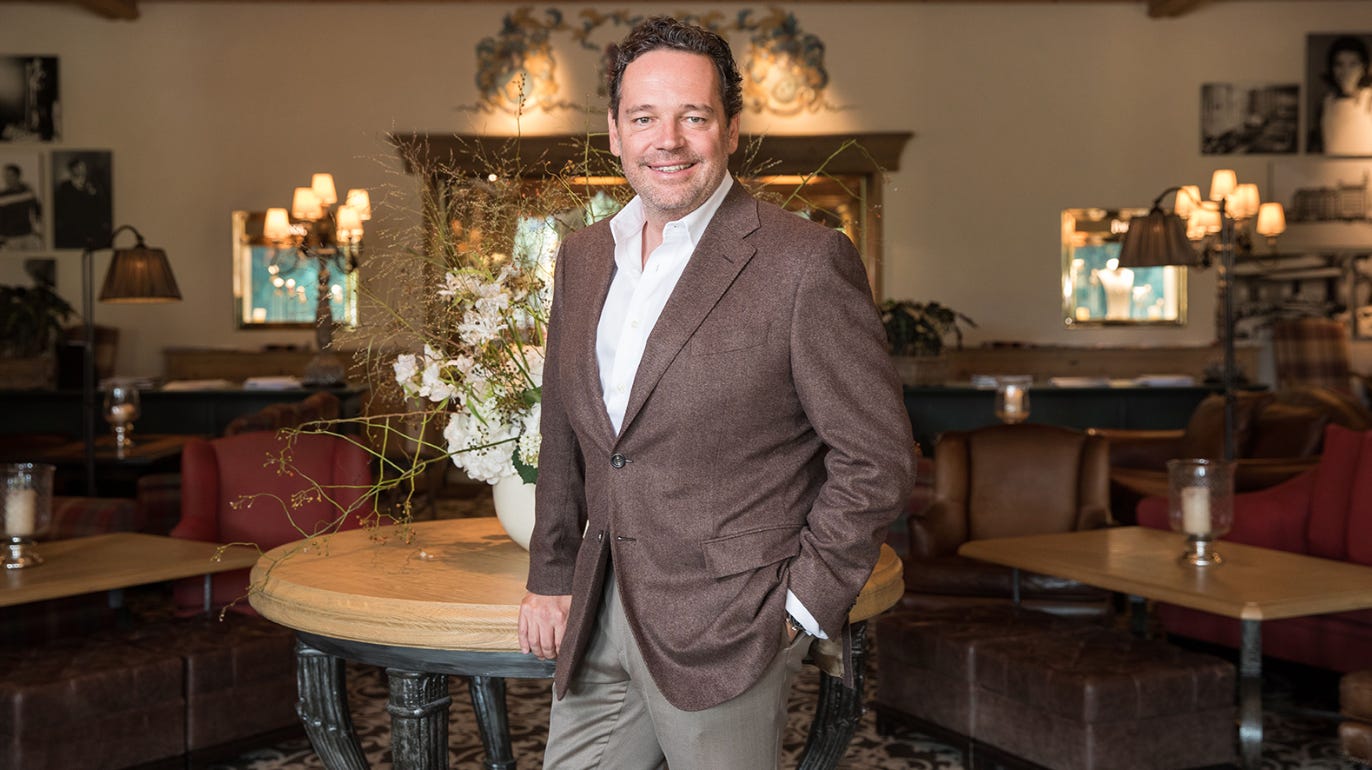


My conversation with Andrea revealed several characteristics of the Curator archetype.
Curators are not drawn to accumulate, but to edit.
One of the most striking qualities of Andrea is his restraint. While many luxury brands chase trends, he remains very selective about what belongs and what does not.Curators preserve culture through stewardship.
The Latin root of the word curator, curare, means “to care for.” Andrea feels a responsibility to protect something larger than himself and to preserve and transmit the values, traditions, and standards that were set generations ago.Curators find meaning in continuity.
In a world obsessed with disruption, Andrea’s philosophy is remarkably different. He knows that his guests return to Gstaad Palace time and again, because of its consistency. They don’t see it as a sign of stagnation, but as a source of trust and connection.Curators make complexity feel effortless.
Behind the scenes, Gstaad Palace is extraordinarily complex. It welcomes thousands of guests from around the world, manages hundreds of employees, maintains a century old property, and upholds exacting standards of service across every touchpoint. Yet guests experience none of that complexity. What they encounter instead is something that feels natural, elegant, harmonious, and complete.
Curious to learn more about the remarkable story of Gstaad Palace? Discover how three generations of a family-owned hotel not only survived and thrived through decades of change, but also helped shape the beautiful alpine village of Gstaad as we know it today. Tune in to the full podcast conversation below.
César Ritz: The First Great Curator of Luxury
Andrea Scherz is not the only hotelier who embodies the curator archetype. In an earlier podcast episode, I explored the life and legacy of César Ritz, another Swiss hotelier, founder of the Ritz-Carlton brand, whose name has become synonymous with luxury itself.
Like Andrea, César understood that true luxury is not about opulence. It’s about seamlessly arranging, refining, and orchestrating every aspect of the guest experience. He was known to obsess over every detail in his hotels, from the lighting and seating to the service and social choreography. I call these details "invisible design." They usually go unnoticed, but have an enormous impact on how people feel within a space.
César understood then what Andrea sees today: that hospitality, at its best, is not measured by occupancy rates or guest satisfaction scores. It emerges from a total aesthetic system, where every detail contributes to a coherent whole.
The Curator’s Shadow Side
The same sensitivity that allows Curators to recognize subtle distinctions and create aesthetic environments can also make them vulnerable to perfectionism.
Curators often become overly attached to their rules, standards, and customs. They may resist change, not because they reject innovation, but because change threatens their need for order and control.
César Ritz offers a powerful example. His almost superhuman ability to anticipate guests’ needs, combined with his relentless attention to every detail, ultimately led to a mental breakdown. In 1902, at the height of his success, César suffered a nervous collapse from which he never fully recovered. He spent the final years of his life largely incapacitated, unable to return to the business that bore his name
The Curator’s challenge is to learn when to stop editing and recognize that beauty comes from thoughtful selection, not absolute control.
Why the Curator Matters More Than Ever
The Curator archetype is especially relevant in this age of abundance.
We now have access to more information, products, content, choices, and stimulation than at any point in human history. Yet abundance has not necessarily made us richer. If anything, it has made us more overwhelmed, distracted, and disconnected.
Curators help us navigate the noise. They know how to create order without sacrificing richness and how to bring coherence to complexity. In a world of infinite choice, that ability may be one of the most valuable human skills of all.
Perhaps that’s why Gstaad Palace continues to attract many of the world’s most discerning guests. It offers something that money alone cannot buy: a world steeped in history, guided by a clear point of view, and sustained by a rare sense of continuity in an age of constant change.
Are You a Curator?
Do you feel more comfortable refining existing ideas than creating entirely new ones from scratch?
Do you seek depth, richness, and complexity, while feeling uneasy around clutter, randomness, or excess?
Do you notice details that others seem to overlook?
Do you take pleasure in arranging objects, ideas, experiences, or people into a coherent whole?
Do you appreciate tradition, while remaining open to experimentation and discovery?
Are you naturally inclined to collect references, inspirations, books, images, or objects, and organize them in meaningful ways?
Do you find yourself constantly refining your home, your wardrobe, your work, or your daily routines?
Do friends and colleagues regularly seek your recommendations, trusting your judgment and point of view?
Do you believe that environments influence how people think, feel, and behave?
Do you derive more satisfaction from improving something than from acquiring something new?
If you answered yes to most of these questions, you may be a Curator. But the Curator is just one of several distinct Aesthetic Archetypes my team and I have identified through our research. In the essays and podcast episodes ahead, we'll explore the others and the myriad hidden forces that shape their perceptions, preferences and behaviors.
Next week, we'll release our latest MasterClass, The Science of the Senses. After all, taste is built on sensation. In this class, I'll explore how our senses function, how they work together, and how they ultimately shape the way we perceive beauty, assign value, and experience the world around us.
As always, stay tuned and attuned.
Pauline
I found this very balanced- the quest for cohesion is often a mask for perfectionism and it could lead to system collapse- both personally and to projects.
I really enjoyed reading this article and listening to podcast with Andrea S. I love how you used the idea of good "Taste" when it came to aesthetic intelligence. In grad school, I wrote my master's thesis on Howard Gardener's multiple intelligence. I never thought about aesthetic intelligence, that's neat how you thought of that. One is not born with good taste nor can they just learn it from a book. They, according to you, have to be around it and grow up amongst it. If, this is the case, where would you put the acquiring of good taste or aesthetics on Maslow's Hierarchy of Needs? What stage do you have to be in to fully grasp the concept of good taste. To me, after reading your articles, it's up there with great civilizations. Right? Yay or Nay?