

Welcome to Aesthetic Intelligence!
by Pauline Brown

From strategy to finance, from marketing to teaching — I’ve held many different roles in my career. All have been bound by one thread: the convergence of culture, commerce, craft, and creativity. I call this the Business of Aesthetics.
Over the past decade, I’ve watched many companies let that thread unravel.
It all began back in 2015, when I held what many of my friends considered “the best job in the world.” As head of LVMH North America, I enjoyed unparalleled access to cultural capital — front-row seats at fashion shows, private art viewings, champagne tastings, and black-tie galas — sometimes two or three a night.


I wasn’t just running a business; I was stewarding a family of maisons imbued with centuries of heritage and enduring status.
But LVMH was, and still is, more than a portfolio of storied brands; it’s a performance machine. The company’s mastermind, Bernard Arnault, demanded that his team achieve double-digit growth, quarter after quarter, across every category, every channel, every geography. Success only raised the bar higher.
Behind the glamour lay a fraternité of sharp-elbowed, ambitious men, fiercely protective of their turf. Their disdain fell heavily on others—especially Americans. Even more so, American women. I was doubly qualified.
The role seemed dazzling, yes—but beneath the surface it was politically charged, relentlessly demanding, tightly controlled, and, at its core, antithetical to the very spirit of aesthetics.
The word “aesthetics” is derived from the Greek word “aisthētikos” (αἰσθητικός), which means “perceptive” or attuned to sensations and feelings. Nowadays, we use it to describe the key principles of taste and beauty.
While LVMH does create and curate beauty on a grand scale, I believe the mechanics of empire-building — the pursuit of profit, power, scale and speed, often accompanied by politics, rivalries, and the subordination of ideals — cheapen the aesthetic experience. After all, in matters of beauty, intention is as important as effect.
My Aesthetic Aha
Toward the end of my tenure at LVMH, I took a family vacation to Vienna, where my father was born. Standing before what had once been my family’s clothing store, Kleiderhaus Goldstein, at 44 Kaiserstrasse, I remember thinking: “Wow. Israel Goldstein would have been astonished by his great-granddaughter’s success. In his days, such an ascent would have been unthinkable.”
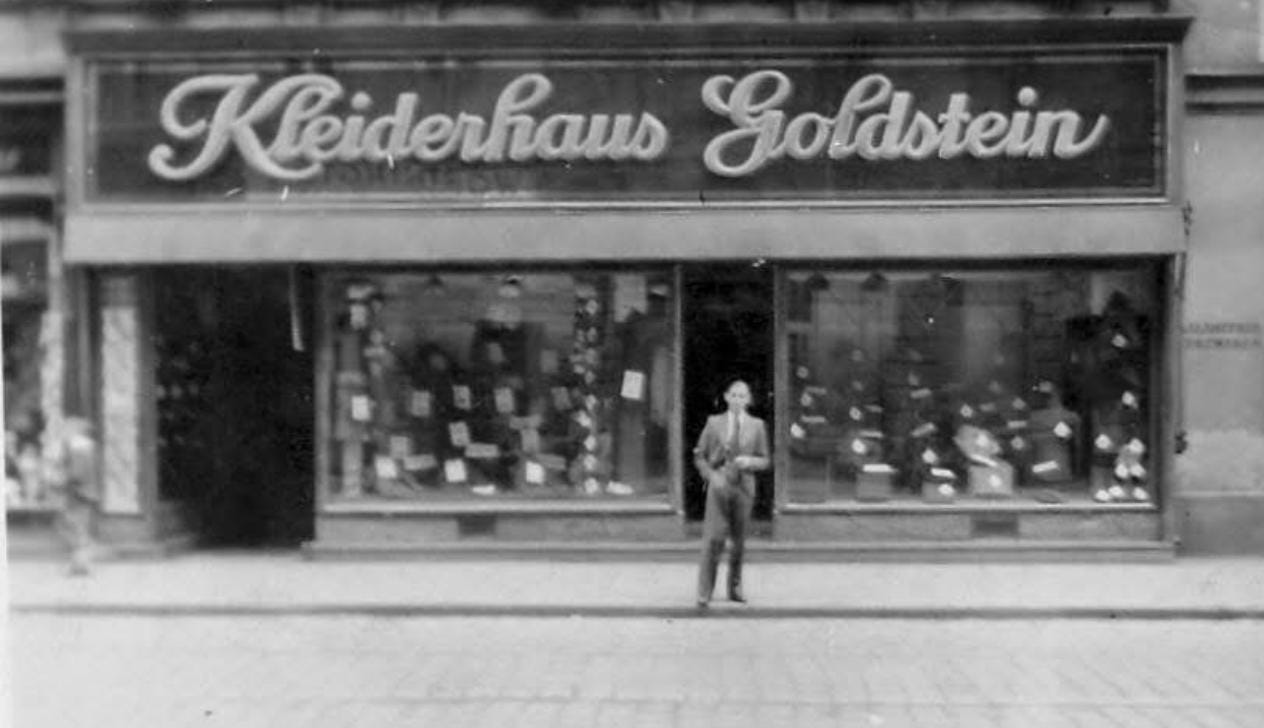
You see, all four of my grandparents were Holocaust survivors. My father’s family fled Vienna for New York in 1939. My maternal grandparents emigrated from Frankfurt to Cape Town via Barcelona—a circuitous route made more traumatic by the Spanish Civil War.
On both sides, it was the women—my grandmothers—who supported their families through harrowing times. They did so through fashion.
Granny Hedy started a line of high-end children’s clothes at her kitchen table in the 1940s, eventually selling into boutiques across America. My Omi harnessed her passion for dressmaking into a line of evening gowns inspired by the grand couturiers of Paris and marketed to the gentry of South Africa.
From Hedy, I inherited a reverence for elegance and an eye for detail. Even her undergarments were exquisitely made. From Omi, I learned how to tell stories through products. She had a real knack for transforming simple frocks into characters and costumes.


These women didn’t just make fashion. They made lives.
Their businesses may have survived because of their hard work and discipline, but they thrived because of their Aesthetic Intelligence. They instinctively knew what we all should know and master: that taste matters.
Why Taste Matters (Now More Than Ever)
When I started my career about 30 years ago, people loved fashion. Shopping was exciting, a chance for discovery, play, self-expression. It was a form of entertainment. Nowadays? Not so much.
Today we can get just about anything we want – anywhere, anytime, at any price. But when everything is so easily and instantly available, nothing feels magical. Nothing is all that desirable.
Even luxury brands, once rarefied and elusive, have become ubiquitous. They churn out endless products—collaborations, extensions, and novelties—while courting mass audiences and flooding our social feeds.
Online content creators and critics abound, most with no direct experience in fashion, only hashtags and hot takes masquerading as expertise. They mistake logo-spotting for discernment, confuse access for authority, and reduce a centuries-old culture of craft and connoisseurship to clickbait and memes.
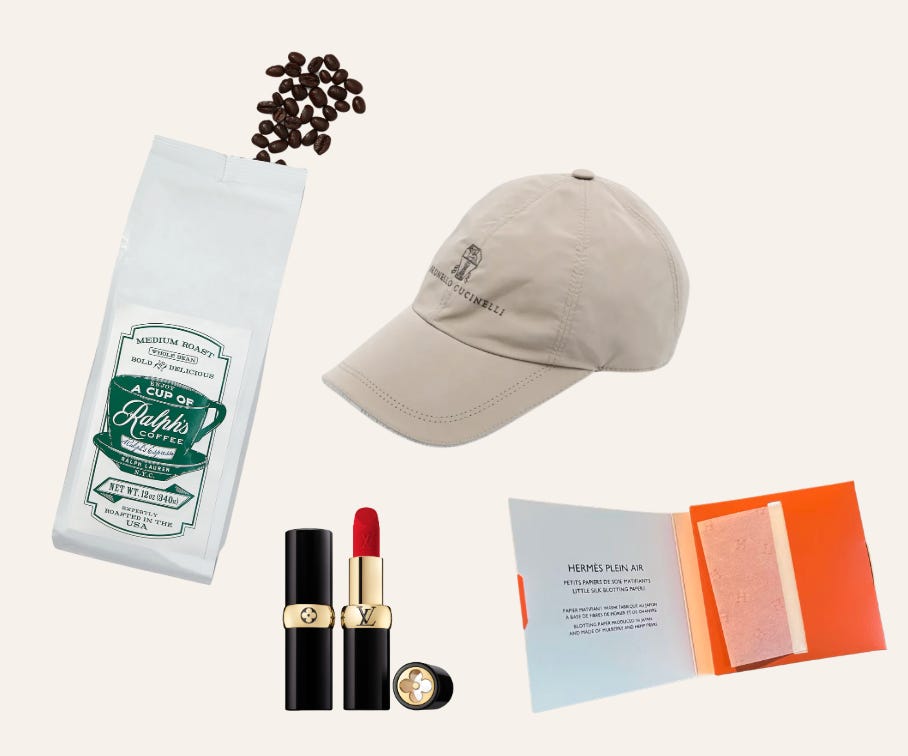
Even the word “luxury” has been stretched so thin it now adorns everyday commodities like coffee beans, lipsticks, baseball caps and blotting paper.
This crisis isn’t unique to luxury or to fashion. Today, most businesses worship market share, growth and efficiency at the expense of meaning and delight. Their leaders are so bottom-line driven that they’ve lost touch with what people actually seek: experiences that move them, feelings that inspire them, and aspirations that define them.
That’s where Aesthetic Intelligence comes in. It’s about sharpening our ability to see, feel, and create beauty. It’s about instilling the human touch back in business. And it’s about recognizing that, in a world inundated with stuff, people don’t crave more stuff. What they crave - universally and eternally - is aesthetic delight.
Why this Substack Matters
This Substack is where I’ll share stories, strategies, and sparks of inspiration. My mission is to help others cultivate their own Aesthetic Intelligence, and apply it to the work they do as well as the lives they lead.
Looking ahead, my plan is to share lots of fresh content each week, including:
case studies on how Aesthetic Intelligence elevates brands, improves performance, advances culture and enhances our daily lives;
podcasts featuring creative entrepreneurs, tastemakers, and leaders from the worlds of fashion, beauty and design;
fun ideas for exercising your own aesthetic muscles; and
many more “aha moments” from my experiences in the field.
If you’ve ever felt that your work or life has become too mechanical, too soulless, too stripped of joy or meaning—this space is for you.
Because aesthetic delight isn’t frivolous. It’s fundamental.
Because aesthetic value unlocks financial value.
Because Aesthetic Intelligence may be the one (and only) advantage that we humans still have over machines. That’s why I call it “the other A.I.”
Stay Tuned and Attuned!
Next week - just in time for Paris Fashion Week - we’ll turn our focus to the enigmatic Coco Chanel, sharing untold stories about her power struggles, compromises, and contradictions that expose the underbelly of luxury. We’ll also critique the debut collection of Chanel’s new creative director Matthieu Blazy, and imagine how Coco would have reacted to the latest collections. And perhaps most importantly, we’ll question the very relevance of fashion shows in an age when street style trumps haute couture, when fast fashion outpaces high fashion, and when algorithms (not editors or retailers) decide what we see and what we buy.
Follow us on Instagram, TikTok, and LinkedIn. Better yet, subscribe here. And, by all means, invite other aesthetes to join this circle.
Celebrating “the other A.I.”, one story at a time!
Cheers, Pauline
P.S. New to Substack? It’s simple. Just click the button above and enter your email. My posts will go straight to your inbox. No apps, no logins, no friction, no fuss. Just a weekly dose of new ideas and reflections.
Loved your book beyond words. So happy for your Substack!
Pauline, so well said! Feels so much harder to find the joy of personal aesthetic expression in fashion these days - can’t wait to hear more!